Grocery tax holiday, school prayer, and CHOOSE Act student-athletes addressed before 2026 legislative session closes
PROTECTED CONTENT
If you’re a current subscriber, log in below. If you would like to subscribe, please click the subscribe tab above.
Username and Password Help
Please enter your email and we will send you a password reset link.
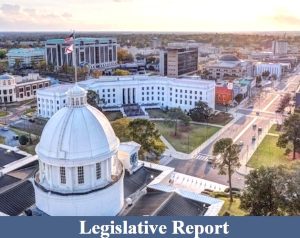 The 2026 regular session of the Alabama State Legislature came to a close last Wednesday. Here are some of the final results of the session.(This summary provided by the Economic Development Association of Alabama.)
Constitutional amendment on school pledge and prayer
A constitutional amendment to enshrine the practice of pledging allegiance to the United States flag every day and requiring local boards of education to adopt policies allowing student-initiated and student-led prayer in public schools received final passage in the Senate on Wednesday.
Key Provisions:
If passed by the voters in an upcoming election, it would:
- Require Daily Pledge of Allegiance: Local boards of education for each K-12 public school in the state must adopt a policy requiring the pledge of allegiance at the beginning of each school day
- Require Student-Led Prayer Policy: Local boards of education would also be required to adopt a policy allowing prayer to be conducted by students, provided that it must be initiated and led by students, and no students may be required to participate in such prayer
Status: Passed both chambers; will appear on a future ballot for voter approval.
Overtime income tax deduction, grocery tax holiday
The Senate gave final approval on Wednesday to Rep. James Lomax’s bill to align Alabama’s income tax code with federal tax code with respect to taxation of overtime. A 2 percent state sales tax holiday for groceries beginning in May was also approved.
Key Provisions:
- Match Federal Law: The bill provides up to a $1,000 state income tax deduction each year when taxes are filed for state income taxes related to overtime pay
- Cost to ETF: The fiscal note originally estimated a cost to the Education Trust Fund of approximately $37.4 million, but the addition of the grocery sales tax holiday has now increased the expected cost to $83.4 million
- Sunset Date: The bill provides for three years of deductions, with a sunset date expiring at the end of the 2028 tax year (providing for the deduction to be claimed on tax returns for 2027, 2028, and 2029)
- Grocery Sales Tax Holiday: The state’s 2 percent sales tax on groceries will be suspended from May 1 through June 30, 2026
Status: Passed Senate with final approval on Wednesday; pending Governor Ivey’s signature.

CHOOSE Act student-athletes
The House gave final approval to SB342, by Senator Clyde Chambliss, carried by Education Trust Fund Chairman Rep. Danny Garrett in the House on Thursday.
Background: The bill is a result of the Alabama High School Athletic Association’s decision in 2025 when it ruled that student athletes receiving up to $7,000 from their allocation of state tax dollars for education constituted “financial aid” and therefore would be ineligible for sports for an entire year. While a judge later held such finding by the AHSAA was illegal under the CHOOSE Act when granting state leaders a temporary restraining order, the bill attempts to prevent any future rule changes or interpretations that would stymie the Alabama Legislature’s and Governor’s strong support of the CHOOSE Act.
Key Provisions:
- Application: SB342 applies to the AHSAA, as well as the Alabama Independent School Association or any similar interscholastic athletic association
- Private Right of Action: A CHOOSE Act student may bring a civil action against any interscholastic athletic association to enjoin the enforcement or implementation of any rule that limits or impedes participation of a CHOOSE Act student in an athletic activity when the student’s CHOOSE Act participation is the determinative factor in their status
- Effective Date: Upon Governor Ivey’s signature, the bill becomes effective immediately
Status: Passed House with final approval Thursday, April 10; heading to Governor Ivey for signature.
General Fund Budget
Governor Kay Ivey signed the General Fund budget on the final day of the 2026 Regular Session after the Senate concurred with the House’s changes on Wednesday.
Key Highlights:
- Total Appropriation: $3.74 billion for FY 2027 (beginning October 1, 2026)
- Modest Growth: Only 1 percent increase over FY 2026 budget
- State Employee Raises: 2 percent cost-of-living raise for all state non-educational employees
- Major Allocations: $1.179 billion for Medicaid; $867.9 million for Department of Corrections; $2.56 billion for ALDOT
- Supplemental Funding: $587.5 million for ALDOT from Public Road and Bridge Fund and Rebuild Alabama Fund
Status: Signed into law by Governor Ivey on Thursday.
Education Trust Fund Budget
Governor Kay Ivey signed the Education Trust Fund budget package on the final day of the 2026 Regular Session after the House concurred with the Senate’s changes.
Key Highlights:
- Total Package: $12.4 billion including regular budget, supplemental, and technology fund
- 2 percent Educator Raises: Pay raise for all education employees
- Education Retiree Bonus: Conditional $32.9 million for one-time bonus ($1 per month of service)
- Career Tech Funding: $150 million in grants for career and technical education
- CHOOSE Act: $100 million appropriation for education savings accounts
- RAISE Act Adjustments: Increased weights for poverty (2.25 percent to 2.75 percent) and special education funding
Status: Signed into law by Governor Ivey on Thursday.
Two data center bills
Electric infrastructure costs – As data centers continue to be built across the Southeast and in Alabama, their energy-intensive operations have drawn scrutiny for playing a role in increasing electricity costs across the nation. SB270, which unanimously passed the Senate earlier this year, passed the House by a vote of 100-1 on Thursday.
Key Provisions:
- Public Interest Standard: When the Public Service Commission evaluates contracts between an electric utility and a large-load data center (150 megawatts or greater), it must determine that the contract recovers all incremental infrastructure costs from the data center (such as transmission lines and new substations)
- Ratepayer Protection: Requires the Commission to find that the contract promotes positive benefits for all other retail electric customers and does not shift costs to existing ratepayers
- Rate Analysis: Requires the Commission to evaluate whether pricing and contract terms could lower costs for other utility customers
- Effective Date: The bill, if signed, becomes effective on October 1, 2026
Status: Passed House 100-1 on Thursday; pending Governor Ivey’s signature.
Tax Abatement Changes
Filed by Rep. Leigh Hulsey, HB399 originally sought to cap the maximum tax abatements for data centers at 20 years, down from 30 years. After going through the legislative process and multiple amendments, the unanimously passed HB399 now does the following:
Key Provisions:
- Reduced Abatement Period Unless Agreement Entered Into: Beginning January 1, 2027, the bill caps the maximum data center tax abatement at 20 years; however, if the data center enters into a written contract approved by the Department of Revenue, the Department of Commerce, and the local governing body, and provides qualified local investments for the community’s benefit, the abatement may continue for up to 30 years. Such qualified investments include infrastructure and road investments, broadband, local education support, and water system upgrades.
- Sales Tax Limitation: Prohibits the abatement of the state’s 4 percent sales and use tax beyond the date a project is placed into service for data centers with a total peak demand of 100 megawatts or greater, except for data center equipment refreshes (such as servers, processors, and similar equipment)
- Targeted County Exception: The Governor may still abate the sales and use taxes if the data center is located in one of the state’s designated “targeted” counties
Status: Passed both chambers unanimously; pending Governor Ivey’s signature.
Solar moratorium fails
The Senate passed Senator Greg Albritton’s bill to place a one-year moratorium on all solar farm developments that have not yet begun construction on Tuesday. After approving an amendment that would have limited the moratorium to only Mobile and Baldwin Counties and allowed for exemptions for new projects, the Senate voted 27-4 to approve the bill.
Procedural Death: However, Senate rules require unanimous consent to transmit Senate bills to the House after the 26th legislative day. After passage, multiple senators objected to the bill’s transmission to the House, killing it for the 2026 Regular Session.
SNAP reform
Senator Arthur Orr’s SNAP reform bill passed the House on Wednesday with 75 ayes and 27 nays. The House also approved an amendment that would have prohibited SNAP funding from being used on energy drinks. As a result, the Senate moved to non-concur and sent the bill to a conference committee.
Key Provisions:
- Federal Waiver Request: Require the Alabama Department of Human Resources to request a federal waiver from the USDA to exclude candy and soda from SNAP-eligible purchases
- Enforcement: If the waiver is granted, require the Department to prohibit the use of SNAP benefits for the purchase of candy and soda
Conference Committee Action: The conference committee stripped the energy drink prohibition out of the bill before each chamber re-voted to send the final bill to Governor Ivey.
Status: Passed both chambers after conference committee; pending Governor Ivey’s signature.
Closed primary bill dies
A bill that would have required party registration for primary elections beginning in 2027 failed to pass the Senate on the last day of the Regular Session.
Background: Rep. Ernie Yarbrough’s bill, which earlier passed the House and was supported by the Alabama Republican Party, was put on the calendar for the Senate’s consideration on Thursday, but was not voted on prior to the Senate moving to adjourn sine die.
What the Bill Would Have Done: The bill would have required voters to register with a political party to vote in that party’s primary election or primary runoff, and imposed a 60-day blackout period preventing voters from changing party affiliation beginning 60 days prior to a primary election through the day of the general election.