How the body of a missing boater on Lake Wedowee was finally found after a massive 8-day search
PROTECTED CONTENT
If you’re a current subscriber, log in below. If you would like to subscribe, please click the subscribe tab above.
Username and Password Help
Please enter your email and we will send you a password reset link.
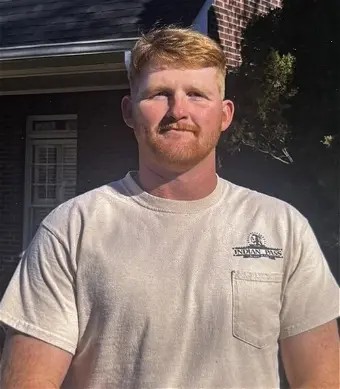
Russell Clanton
The day before the Fourth of July tragedy struck on Lake Wedowee. What should have been a fun outing on the water on the first day of a long holiday weekend turned into a deadly nightmare that left one person injured and another missing in the water for the next eight days.
Here’s how emergency personnel and volunteers from throughout the state and beyond were able to locate the body of 22-year-old Russell H. Clanton of Oxford and bring some sense of closure to his suffering family and friends.
Mutual aid
The story of the recovery of Russell Clanton’s body actually begins almost a year ago in the chambers of the Randolph County Commission. In a meeting on August 25, 2025, the commission agreed to enter into the Alabama Inter-Local Mutual Aid Agreement, a pact among local law enforcement and rescue agencies throughout the state to provide aid to other agencies in the agreement when needed at no additional charge.
“It’s all done through a mutual aid compact, and nobody has to pay one another,” Randolph County EMA Director Donnie Knight told the Randolph County Commission Monday.
The agreement also provides access to state Emergency Management Association resources, including personnel, equipment and funding, depending on the needs of the situation. It was by and large because of this agreement that personnel from at least 26 different agencies were able to participate in the 8-day search for Clanton. The equipment that those groups brought was state of the art searching gear that would have been well beyond the means of rural Randolph County without that agreement.
But in an interesting twist of fate, it was a private group outside of that mutual aid agreement that actually ended up being credited with locating Clanton’s body and ending the search.
Here is what took place that led to that massive response.

The accident
According to the Alabama Law Enforcement Agency, Clanton was the only other passenger in a jon boat that was being operated by a friend, 20-year-old Jake Littleton, on the evening of the accident. As they were traveling through the water in the Big River area of Lake Wedowee, a few miles north of the Highway 48 boat ramp and Wedowee Marine South, the boat struck an object described as a submerged stump in the water and threw both of the young men into the water.
According to reports, Littleton did not have a kill switch attached to him when he was thrown from the boat, and the motor continued to run the boat in circles in the water after the collision with the stump.
Littleton was injured in the accident but survived. He was eventually pulled from the water and transported to Wellstar Kennestone Hospital in Marietta, Ga., to be treated for his injuries. Clanton never resurfaced, and as emergency response personnel arrived on the scene the search for Clanton immediately began in earnest.
Who was Russell Clanton?
If you have a moment, it would be worthwhile to read the obituary of Russell Clanton. This was a young man who was an Eagle Scout and an experienced and capable outdoorsman, even at the age of 22. That experience extended to the waters of Lake of Wedowee.
“The lake is where Russell spent most of his spare time, no matter the weather – sunny, rainy, hot, or cold,” the obituary reads.
It tells of a young man who was just entering the prime of his life, and who carried the qualities of a successful person with him. He had a tight-knit group of family and friends, including the family of Jake Littleton, who was on the lake with Clanton the day of the accident.
Clanton was employed by the Littleton family business, Littleton Electric, which is located in Oxford.
“If the word ‘grit’ was a person, it would be Russell,” the obituary reads. “Russell will be greatly missed, but his legacy and kindness will never be forgotten.”
According to the obituary the family will begin the process of laying their loved one to rest with a visitation service this evening at Dryden Funeral Home in Heflin.
The search begins
As responders arrived on the lake in the immediate aftermath of the accident there was hope that Clanton had somehow found his way to shore and was waiting to be located. There was still at least two hours of daylight left when the accident occurred, so he would have had no trouble visually locating the nearest shore and making his way there if he were able to do so.
However, a search of the banks on either side of the accident area showed no trace of Clanton, and emergency response personnel turned the focus of their search to the water.
And as night fell and darkness set in, and Clanton still had not been found, reality also set in on those conducting the search – this most likely was no longer a rescue mission, but a recovery mission.
A massive effort
By the morning of Saturday, July 4, a little over 12 hours after the accident, the search for Clanton was on in full force. Resources and personnel from around the state arrived on the scene at various times over the following week.
In a presentation to the Randolph County Commission Monday, assistant EMA director Jan Prescott described some of the details of what went into the search.
“The operation extended over eight days and involved local, county, state, volunteer and mutual aid organizations,” she told the commission. “[It included] marine patrol vessels, dive teams, side scan sonar, remotely operated vehicles, aviation assets, land and water search canine teams and advanced communications capabilities.”
Searchers swept the area of the accident repeatedly using submerged drones equipped with cameras, as well as surface-based sonar. Teams kept a visual record of the path of the search, and that record showed countless passes over the area by every team that arrived on sight. Teams were reasonably sure that they were looking in the correct area because the last known GPS signals from Clanton’s phone showed that that’s where he was.
Dive teams also were employed in the search. The depth of the lake in that location extends over 60 feet down. Visibility in most Lake Wedowee waters is already inherently limited because of notoriously murky conditions due to natural debris beneath the surface. Add to that the lack of light at the depth at which the search was taking place, and the words “needle in a haystack” became the go-to description of the efforts to find Clanton.
At most, visibility in those conditions is right around four feet, meaning anything much further away than the length of your outstretched arm cannot be seen.
After multiple false-hope leads and lost “hot spots” the final break in the search came almost exactly eight days after Clanton went missing.
The group credited with finding him was an international charitable rescue group called Christian Aid Ministries. The group that came to Lake Wedowee was based out of Tennessee. The group has Amish and Mennonite connections, got word of the search here, and sent help.
Their website describes their goals: “By God’s grace, Christian Aid Ministries strives to be an honest, efficient channel enabling the church to minister to physical and spiritual needs around the world. It is our desire to connect people who want to help with people who need help. Our ultimate goal is to glorify God and help enlarge His kingdom.”
Closure
In the aftermath, the cooperative, persistent and dedicated nature of the search was heralded both by those who were involved and by those who were outside observers. By all accounts the search stayed organized, and those involved kept the focus where it needed to be – finding Russell Clanton and bringing closure to his loved ones.
“Throughout the incident search strategies were continually evaluated and refined based on operational findings, environmental conditions and emerging investigative information,” Prescott said Monday. “Daily operational briefings and coordinated planning enabled unified command to effectively integrate specialized resources, adapt search priorities and maintain a safe operating environment, despite challenging conditions.”

Related Posts