Audit shows 5-year operating loss of over $2.5 million for Wedowee Utilities Board
PROTECTED CONTENT
If you’re a current subscriber, log in below. If you would like to subscribe, please click the subscribe tab above.
Username and Password Help
Please enter your email and we will send you a password reset link.
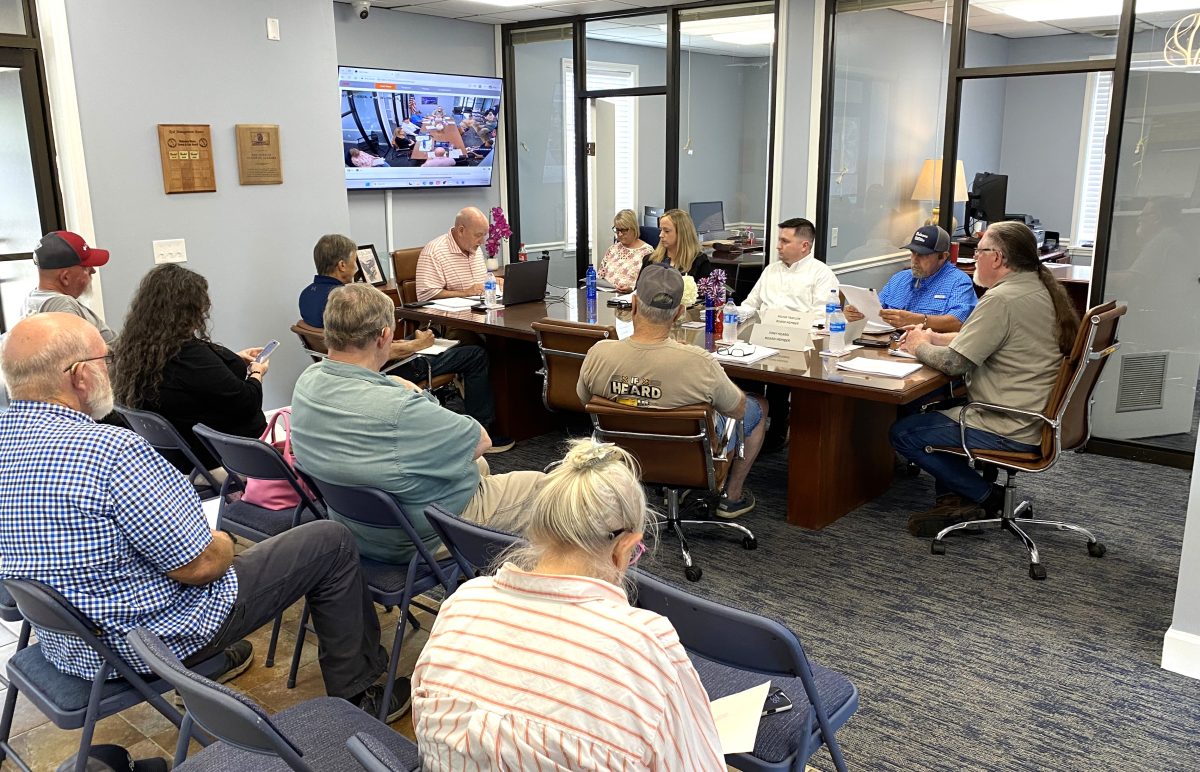
The Wedowee Utilities Board and attendees at Wednesday’s meeting hear details on the audits of 2023 and 2024 from Kim Stallings of MDA Professional Group.
More details about the once-dire financial state of the Wedowee Utilities Board came to light Wednesday when the board met in a called meeting to hear the results of the independent financial audit of the board from the years 2023 and 2024.
The audit was conducted by MDA Professional Group accounting firm, and the audit information was reported to the board by MDA accountant Kim Stallings.
The audit revealed specifics about the financial mismanagement of the Wedowee Utilities Board under former supervisor Brenda Boone and former board chairman and current Wedowee Mayor Tim Coe that eventually put the board on the verge of bankruptcy earlier this year.
Current board director Randy Benefield made sure at the outset of the meeting to clarify what exactly was being discussed, particularly as the state attorney general’s office has an ongoing open investigation into the board.
“It’s important to understand that these were financial statement audits, not criminal investigations or forensic examinations,” he said.
Among the issues revealed in the audit from the years 2023 and 2024 were:
- Significant overtime hours paid and a lack of documentation for those hours
- Bonuses paid through improper channels
- An operating loss of over $1.3 million over the two-year period
- Five straight years of operating losses totaling over $2.5 million
- Unnecessary fees and penalties
“We encountered difficulties in dealing with The Water, Sewer, and Gas Board of the Town of Wedowee’s previous Chairman [Coe] and Management [Boone] in performing and completing our audit,” Stallings said in a written statement Wednesday. “However, we are pleased to report that the new Board and Management (after January 2026) has made diligent efforts to correct and research preliminary findings, and timely provide available requested audit documentation.”
Here is the information in the report from MDA and how it impacted, and continues to impact, the board’s operations.

Lack of documentation for overtime
The Board paid out $163,000 for 3,959 overtime hours in 2023. The following year it paid $117,000 for 3,031 overtime hours. Those numbers are according to MDA’s audit report.
However, outside of the payments themselves, the documentation for those hours was so lacking that MDA was unable to form an opinion of its audit of those records.
“The Water, Sewer and Gas Board for the Town of Wedowee did not maintain sufficient payroll records to support the business purpose for overtime hours worked,” the report reads.
In other words, check records show dollar amounts and who received the checks, but the documentation for WHY that overtime was paid cannot be found or does not exist. In that circumstance it is impossible to verify if those payments were legitimate or if they were not legitimate. Hence, the “no opinion” stance from MDA.
“There are certain things we were unable to audit,” Stallings said Wednesday, “And we weren’t provided documentation as requested.”
The report from MDA elaborates, “Specifically daily timesheets were not available, overtime hours worked were submitted and paid without sufficient documentation, and adequate supervisory approval of payroll was not observable, including payroll for employees served by related parties.”
That last mention of “related parties” could be referring to family members of one or both of former board employees Brenda Boone and Brian Cross. Boone and Cross were the only board employees during that time that had supervisory roles and also had family members who were receiving payments either through payroll or vendor checks.
To put those overtime hours from 2023 and 2024 in perspective, since the new board was installed in February of this year, with Barry Waldrep as the chairman and Randy Benefield as the director, the board has paid a total of 447 overtime hours over nearly a six-month period. Projected over a year that would equal an estimated 900 hours, far below the 3,000-plus from both 2023 and 2024.
“It’s crazy how much less hours it is than what they were,” Benefield told the Leader Thursday.
That reduction in overtime is part of a concerted effort by the new management to get that aspect of payroll under control.
“[Employees] know overtime’s being watched now,” Benefield said. “Before, their own words to me was it didn’t matter what you put down. They were going to pay you. They weren’t tracking us. They didn’t care.”
That reduction in overtime hours has also come with fewer employees on payroll, not more. So it’s not as if more employees are working regular hours to compensate for lost time. And, more importantly for the purposes of future audits, all overtime hours are now being documented with details on what work was done during those hours and why they were necessary.
Also, Benefield said at Wednesday’s meeting that the current management has implemented strict overtime policies to make sure the board does not experience the same dearth of documentation that has existed in the past.

Bonuses through improper channels
Similar issues were found in regards to bonus payments during the two years in the audit.
“Certain employee bonus payments were disbursed through vendor payment processes rather than processed through payroll,” the report reads. “These payments were not supported by payroll records and were not included in payroll reporting or related tax reporting. Furthermore, documentation evidencing formal approval of these bonus payments by the Board of Directors was not available for audit.”
In other words, again, there is a record of the checks, the amounts of the checks and who received them. There is no record that they were approved by the board for payment, nor were they properly reported for tax purposes.
In both 2023 and 2024 approximately $48,000 in bonuses of this type were paid for a total of $96,000 over the two year period.
Operating loss
The audit report shows a combined operating loss of just over $1.3 million combined for 2023 and 2024. That breaks down to a loss of over $845,000 in 2023 and just over $500,000 in 2024.
“2024 was the fifth consecutive year of a loss,” Stallings told the board, “hence, the going concern.”
The total operating loss over that five-year period was over $2.5 million.
“These losses have primarily resulted from aging infrastructure, increased maintenance and repair costs, increased payroll overtime hours and employee bonus expenses, water treatment plant operations and regulatory compliance expenditures,” the report reads.
That cumulative loss prompted an obvious question from board chairman Barry Waldrep.
“To be at a loss five years in a row that adds up to $2,546,000, how did this continue to operate?” he asked.
The answer is that operating loss is not the same thing as cash loss. Operating loss includes things like depreciation of assets, which does not result in money changing hands, but does show up on the bottom line.
Stallings said that revenue continued to flow enough to overcome those losses and allow the board to operate, but cash reserves were significantly depleted over the five-year period.
“You’ve been staying afloat,” Stallings said. “But obviously that won’t continue long term,” unless changes are made.
Fees and penalties
The audit shows a total of nearly $80,000 paid over the two-year period in fines and penalties.
That does not include hundreds of thousands of dollars in unpaid taxes and IRS penalties inherited by current management that has since been nearly paid off.
“We’ve paid so much money in taxes or penalties,” Benefield said Wednesday. “The amount of money that was just wasted on late fees is a salary for a year for a highly-paid person. It’s a lot of money. And we had the money. We had the money. There was no reason to be late paying stuff.”